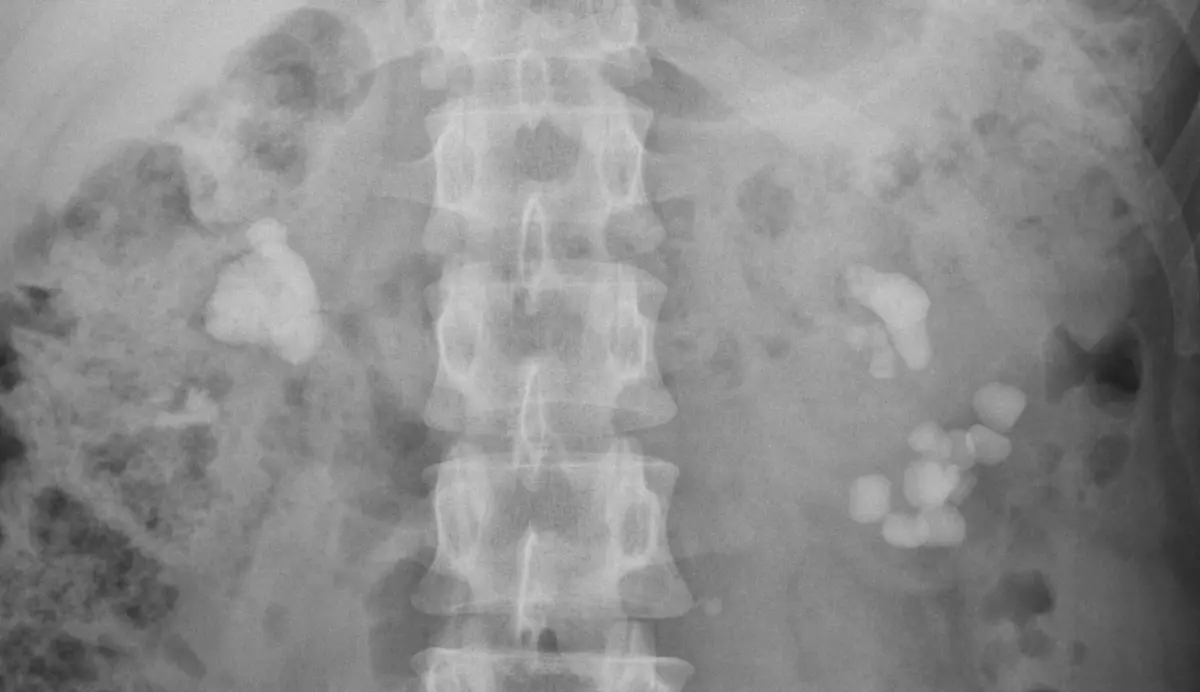
Some kidney stones are straightforward. Others are not. A staghorn stone (a stone that grows to fill the branching drainage channels inside the kidney, so its shape resembles a stag's antlers) can be complete or partial, and many patients also have a large total stone burden spread across several parts of the kidney.
The picture gets harder still when the kidney's anatomy is unusual, when the patient has had open surgery before, when the patient is very young or very old, or when there are significant other illnesses. These are what I call complex renal stones, and they were the subject of my talk at the Emirates Forum of Urology in 2018.
What we are aiming for
With a complex stone, the goals are easy to list and hard to achieve together. We want complete stone clearance with the least harm to the patient. We want the fewest procedures, and the shortest time until the patient is stone free.
Planning starts with the patient in front of me. I consider their other health conditions, the site, size and shape of the stone, and the anatomy of the kidney's drainage system. Every patient, every stone and every collecting system is different, and each of these shapes the surgical plan.
The options on the table
There are several ways to treat a large stone, and it helps to see them side by side. The main single treatments are PCNL (keyhole surgery through the back to remove kidney stones), RIRS (retrograde intrarenal surgery, where a thin flexible scope is passed up through the urinary passage into the kidney) and ESWL (shock wave lithotripsy, which breaks the stone from outside the body). There is also a primary combined approach, where one team works through the back and another comes up from below at the same time. Open or laparoscopic surgery remains available.
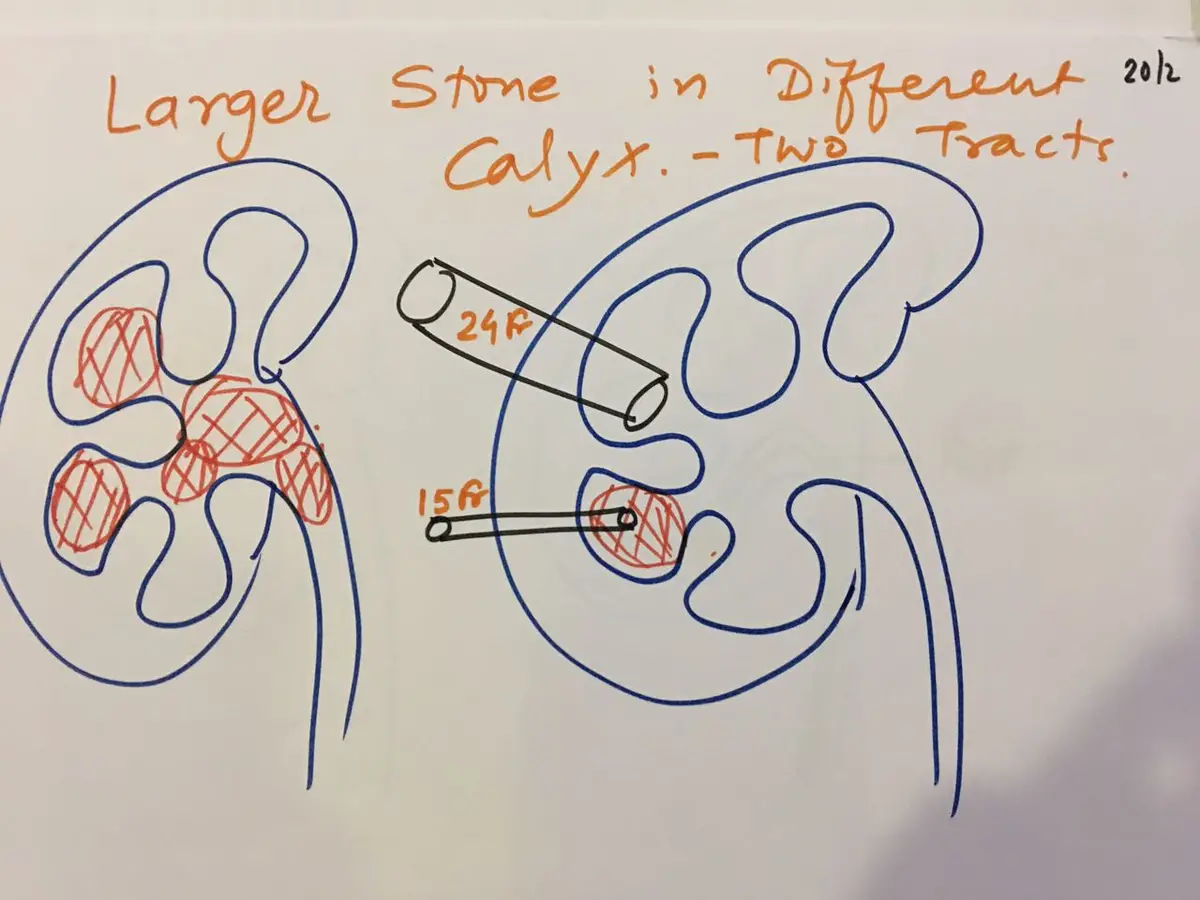
Each has trade-offs. PCNL gives direct sight of the stone, a high chance of clearance and a short time to become stone free, with far less pain than open surgery. Its downsides are that a large stone may need more than one tract (the passage made through the back into the kidney), longer surgery, and risks of urine leak, bleeding, infection and injury to nearby organs. Rarely, the kidney may be lost.
RIRS is less invasive and relatively safer for high-risk patients, but it often means more than one procedure, a longer period with a DJ stent (a soft internal tube from kidney to bladder), and a chance that fragments collect in the lower part of the kidney. ESWL is non-invasive with fewer complications, but it usually needs several sittings, can cause a trail of fragments stuck in the ureter (steinstrasse, German for "stone street"), and takes the longest to reach clearance.
The primary combined approach offers a high clearance rate in a short time. The cost is a higher expected complication rate, higher pressure inside the kidney, and the need for more expertise and two teams in the room.
What the sandwich means
Sandwich therapy is a planned sequence. The classic version is PCNL, then ESWL, then PCNL again. The keyhole operation removes the bulk of the stone, shock waves break up what is left in places the first tract could not reach, and a second look through the same tract clears the fragments.
This older version is time tested, less expensive, and less morbid because ESWL itself is safe. It can reach any stone. Its weaknesses are the same as those of ESWL: a risk of kidney damage and steinstrasse, a longer stent period, and a longer wait for full clearance.
The contemporary version replaces the middle step with endoscopic surgery: PCNL followed by RIRS, a second look with a nephroscope (the telescope used inside the kidney), or a second-stage combined approach through the tract that is already made. This shortens the time to clearance, with fewer complications and a high chance of clearing the stone. It does need more expertise and two teams, the nephrostomy tube (a drain from the kidney out through the back) stays in longer between the two procedures, a new tract is sometimes needed, and some stones simply cannot be reached with a scope.
Matching the second step to what is left
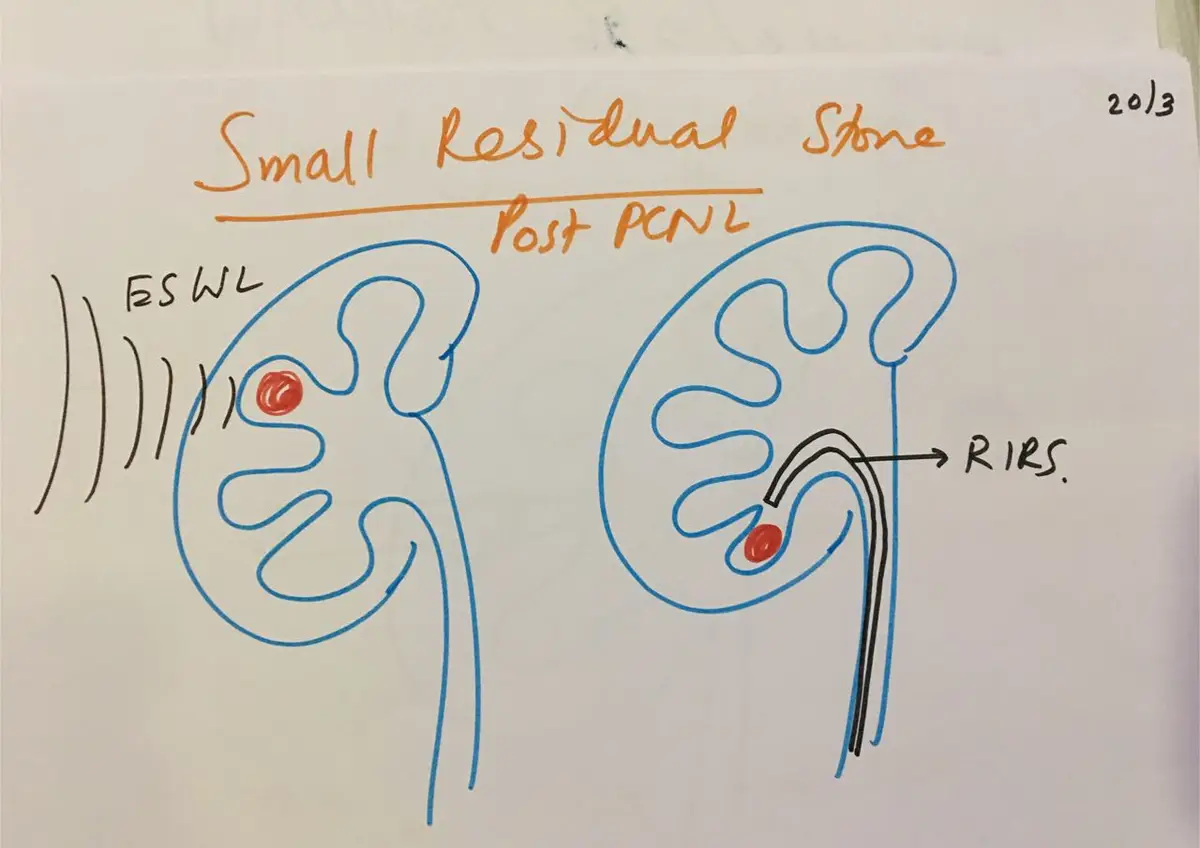
After the first PCNL, the choice of the next step depends on what remains. A larger residual stone is best dealt with through another tract. A stone in the calyx (one of the cup-shaped chambers of the kidney) right next to the tract can be reached with a flexible nephroscope or a combined approach. A small residual stone that the tract cannot reach is suited to ESWL or RIRS.
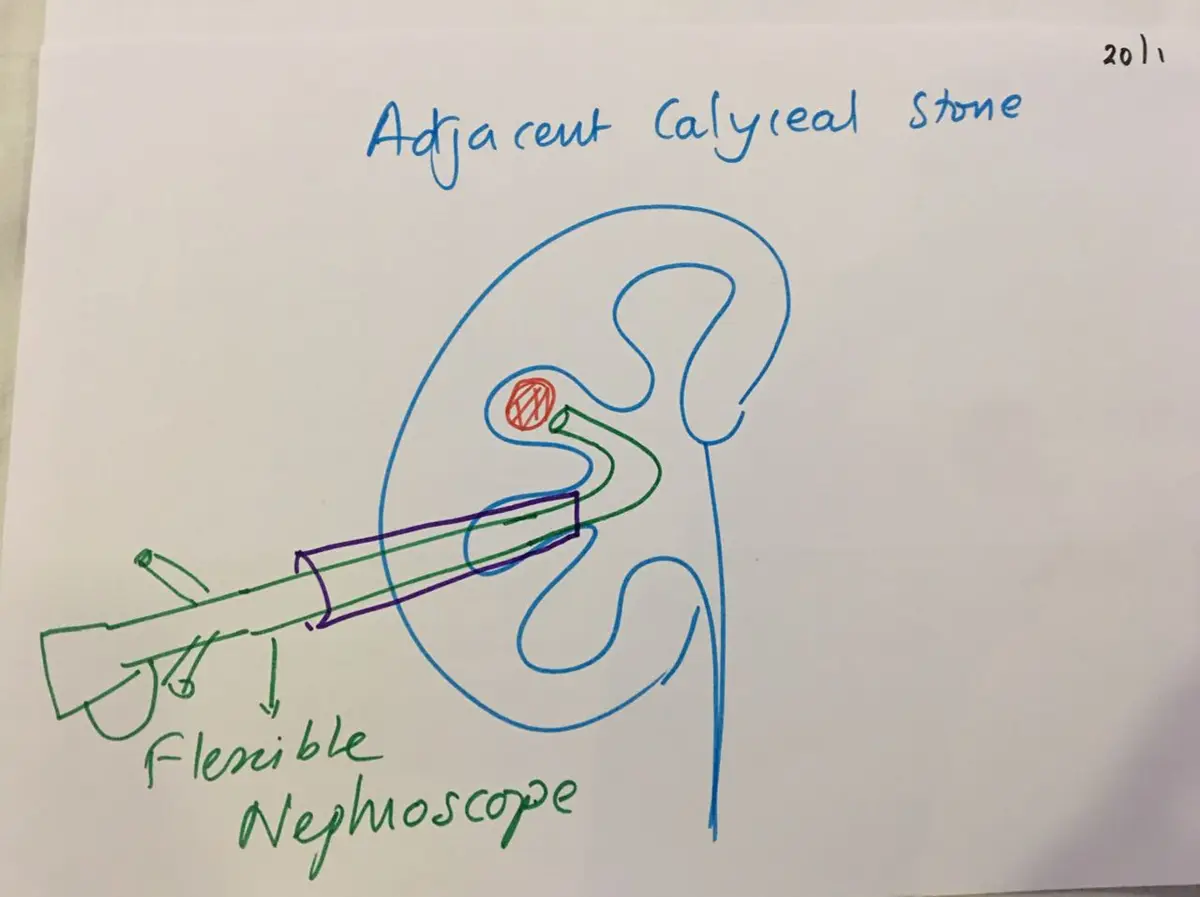
A flexible nephroscope used through the existing tract can be brought in during the first or the second session, and as part of a combined approach. It is a larger scope with less flexion, and it suits the immediately neighbouring calyx. The practical points I weigh with it are laser targeting, manoeuvring, vision, fluid leaking around the scope, and basketing the fragments.
What the cases showed
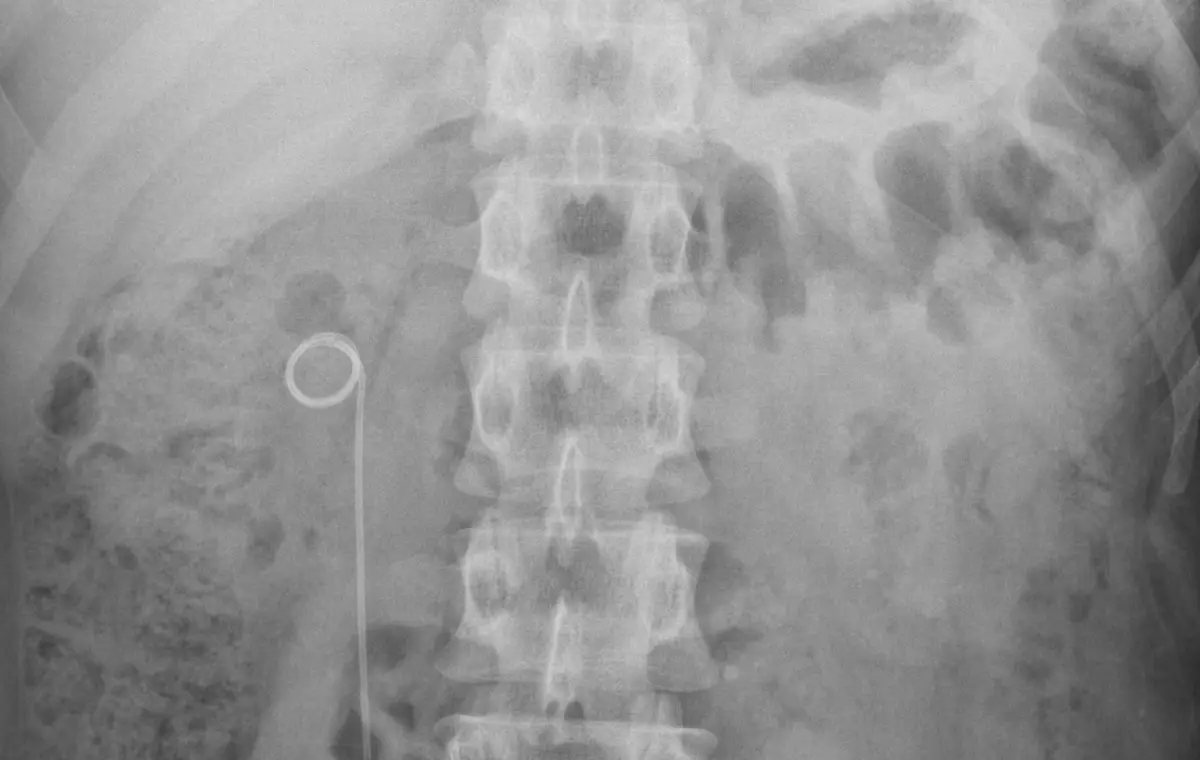
In the talk I went through five cases in patients I treated, from partial staghorn stones to large stones in both kidneys. They moved through different sequences: PCNL followed by a combined approach, RIRS then PCNL, and in some cases PCNL and a combined approach followed by one, two or three sessions of ESWL, with ureteroscopy to finish in one case. The sequence was different each time because the stone, the kidney and the patient were different.
A tailor-made plan
My conclusion was simple. Managing complex kidney stones needs a plan made for the individual patient, and no one procedure can be the gold standard for every type of stone. With so many methods available, the decision should be made together, weighing these factors and the patient's own wishes.
In practice, contemporary sandwich therapy starts with a primary PCNL to debulk the stone that is causing the blockage, with a DJ stent placed. That is followed by ESWL or further endoscopic surgery, choosing the best method for that particular collecting system, stone bulk, feasibility and the patient's preference.