Prostate cancer is the most common form of cancer in men, apart from skin cancer. The reassuring part is that only one in 41 men die from it. That gap between how often it is found and how often it is fatal is the reason decisions about testing and treatment are made with care.
In this awareness talk I set out what raises a man's risk, how the cancer is looked for, and the range of treatments, from careful monitoring to major surgery.
Family history explains only a small part of the risk
Many men assume prostate cancer is mainly inherited. In fact, only about 9 percent of men with prostate cancer have a family history of it. Mutations in some genes also raise the risk.
Other factors that have been linked with a higher risk include high blood pressure combined with a large waist circumference, balding, a past infection with gonorrhoea, night shift work, and smoking.
Four tests a urologist may use
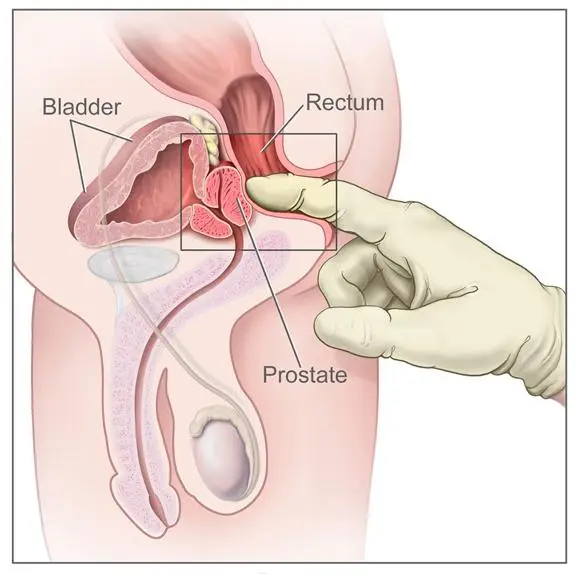
The first is the digital rectal examination, or DRE. The doctor inserts a lubricated, gloved finger into the rectum and feels the prostate, which lies just in front of it. A DRE can sometimes pick up lumps or nodules that suggest cancer, as well as an enlarged gland or the tenderness of prostatitis (inflammation of the prostate).
The second is the PSA blood test. The prostate makes a protein called prostate-specific antigen, or PSA. When PSA is high, prostate cancer is more likely, but an enlarged prostate can also push PSA up, so a raised result is a reason for further assessment.
The third is a prostate ultrasound, called transrectal ultrasound, in which a small probe placed in the rectum gives a close view of the gland.
The fourth is a prostate biopsy. A needle takes small pieces of tissue from the prostate so they can be checked for cancer under the microscope. This is usually done through the rectum.
Screening is decided man by man
Recommendations about whether a man should be screened, and at what age, differ. For that reason I favour an individualised strategy that takes each man's risk into account.
In the approach I presented, screening is considered for men in good general health with a life expectancy of more than ten years. It starts from above 50 years of age, or from above 45 for men with a family history. The PSA level at a given age then guides how closely a man is followed: a PSA above 1 ng/ml at 40, or above 2 ng/ml at 60, points to follow-up every two years.
A conversation with a urologist about the possible benefits and risks of testing is the right starting point for any man thinking about it.
Not every cancer needs immediate treatment
Some men choose to delay treatment. There are two quite different ways of doing this.
Watchful waiting is for men who have no symptoms from the cancer and whose life expectancy is less than ten years.
Active surveillance is for men with low-risk cancer who would be suitable for curative treatment. The cancer is monitored closely, with the possibility of moving to active treatment in the future if it changes.
Treatment for cancer confined to the prostate
When the cancer is localised, meaning it is still confined to the prostate, and active treatment is chosen, the two main options are radical prostatectomy (surgery to remove the whole prostate) and radical radiotherapy (a full course of radiation aimed at the prostate).
When the cancer is advanced
For high-risk cancer that has grown beyond the gland locally, cancer that has spread elsewhere in the body, or cancer that has come back after earlier treatment, the options change.
Hormone therapy works by lowering the body's production of testosterone or blocking its effect. Chemotherapy is another option. Palliation, meaning care focused on comfort and relief of symptoms, is an important part of treatment at this stage.
Across all these stages, surgery, radiation, hormone therapy and chemotherapy each have their place, and the right choice depends on the individual man and his cancer.
If you have urinary symptoms or a raised PSA, or have concerns about your prostate cancer risk, please see a urologist.