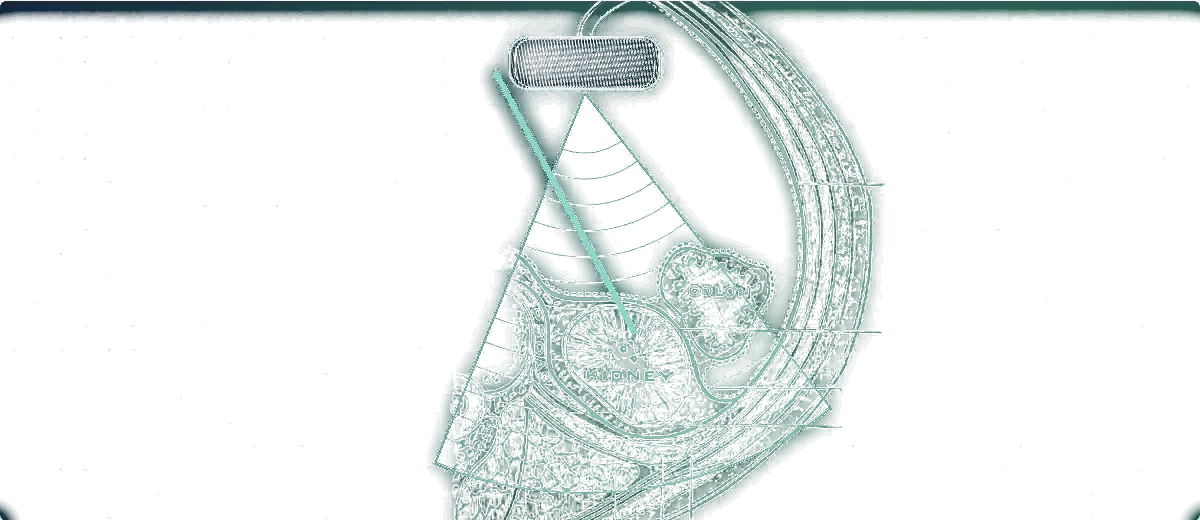

Large and complex kidney stones are often removed by PCNL (percutaneous nephrolithotomy), keyhole surgery through the skin into the kidney. In its traditional form, the patient lies face down (prone), live X-ray (fluoroscopy) guides the needle into the kidney, a nephrostomy tube is left in place to drain the kidney through the skin, and the patient stays in hospital for a few days.
FAST-PCNL changes all four. The letters stand for fluoroscopy-free, with ultrasound guiding the needle instead of X-ray; ambulatory, meaning the patient goes home the same day; supine, with the patient lying on their back; and totally tubeless, with no nephrostomy tube and no ureteral stent, the thin tube sometimes left in place between the kidney and the bladder.
Each change has its own evidence. My talk asks what that evidence shows and whether all four work together on the same day. The short answer: the 2026 EAU guidelines support each change on its own, including same-day discharge and going tubeless only in selected or uncomplicated cases, and the evidence for doing all four together is still thin.
Where does the name FAST-PCNL come from?
The name FAST-PCNL derives from a 2026 video abstract by S. Kaphle at the American Urological Association meeting. It described 21 patients treated between August and October 2025. Access was ultrasound-only, in a modified supine position, using ECIRS (endoscopic combined intrarenal surgery, in which the kidney is reached through the back and up through the bladder at the same time). The tract was sealed with a haemostatic agent, a material that stops bleeding, and no nephrostomy or stent was left.
The mean operative time was 54 minutes, and there were no intraoperative complications. Every patient went home the same day, on average 3 hours 50 minutes after the operation.
It should be read with care. It is a conference abstract, not a full paper. It reports no stone-free rate, and 30-day follow-up covers only 11 of 21 patients, with one emergency department visit and one readmission.
Fluoroscopy-free: Is ultrasound as good as X-ray?
PCNL generally carries the highest radiation dose of any stone procedure, with a 2024 systematic review reporting up to 33 mSv for the patient. It also gives the urologist the highest exposure of all endourological procedures, and the dose to the surgeon's eyes and hands is higher in prone PCNL than in supine. In one study, ultrasound-only PCNL spared patients a mean of 10 mGy per case.
Ultrasound matches fluoroscopy in stone clearance. A 2026 meta-analysis of 11 randomised trials involving 1,370 patients found an equivalent stone-free rate (OR 1.03) and fewer overall complications with fluoroless ultrasound PCNL (OR 0.57). In these figures, a ratio of 1 indicates no difference. In a randomised trial of complete supine PCNL in 51 patients, the paper's abstract reports 88.5% stone-free with ultrasound and 75.5% with fluoroscopy, a difference that was not significant.
The 2026 EAU Guidelines on Urolithiasis, at level of evidence 1a, state: "Both fluoroscopy-guided and US-guided PCNL are equally safe, with equivalent SFR and complication rates."
Ultrasound-only access is easier in some kidneys than in others, so cases need careful selection. A dilated collecting system (hydronephrosis) predicts success in gaining access with ultrasound, and the absence of a staghorn stone, a large stone that branches through the kidney, predicts success in widening the tract. For simpler stones, scoring 5 to 6 on the S.T.O.N.E. complexity score, ultrasound was as safe and effective as fluoroscopy, with no radiation. For stones scoring 7 to 8, 69.8% were stone-free at three months with ultrasound, compared with 89.4% with fluoroscopy.
A higher BMI steepens the learning curve. Conversion to fluoroscopy during surgery was 2.84% in a systematic review, but 11 of 36 cases in a newer programme. My message to surgeons starting out is to begin with ultrasound-only access for simpler hydronephrotic cases.
Supine: does lying on the back clear stones as well as prone?
A meta-analysis of 11,774 patients found no significant difference in the stone-free rate between the supine and prone positions (RR 0.9945), with fewer major complications (RR 0.7461) and a shorter operative time in the supine position. In a randomised trial of complex stones, Clavien grade 3 or higher complications occurred in 3.6% of supine patients and 14.3% of prone patients, and the mean operative time was 117.9 minutes versus 147.6. The EAU guidelines, again at level 1a, state: "Both prone and supine positions are equally safe with equivalent SFR."
Supine also allows for a second team. The Galdakao-modified supine Valdivia position enables antegrade access via the back and retrograde access from below simultaneously. With ECIRS in this position, 81.9% of 127 patients were stone-free after one session, and 87.4% after an early second look. In a series of 557 supine procedures, the colon was never damaged.
Two case reports show that supine, ultrasound-guided PCNL can clear a complete staghorn stone. In Jakarta in 2020, a 46 by 30 by 24 mm stone was cleared without X-ray using Alken metal dilators; a stent and a nephrostomy were placed. The patient went home on day 2 and required a 252 mL blood transfusion. In Rochester in 2022, two surgeons worked simultaneously through two tracts on a 52 by 44 by 27 mm stone, clearing it in 45 minutes after access, with less than 25 mL of blood loss and 60 seconds of fluoroscopy; the patient went home the next day with a stent and no residual stone on CT. Single case reports show what is feasible, not what to expect.
Totally tubeless: when can the nephrostomy and stent be left out?
A Cochrane review found, with moderate certainty, that totally tubeless PCNL shortens the hospital stay by about 1.55 days compared with standard PCNL. A 2026 meta-analysis of 21 studies and 2,837 patients found fewer total complications with totally tubeless PCNL (RR 0.63), no difference in the stone-free rate (RR 1.02), and no significant difference in transfusion (RR 0.77). A meta-analysis of randomised trials found fewer urinary fistulas with tubeless PCNL (a stent, no nephrostomy) than with a nephrostomy tube (RR 0.18).
The EAU guidelines give a strong recommendation: "Perform a tubeless (without nephrostomy tube) or totally tubeless (without nephrostomy tube and ureteral stent) percutaneous nephrolithotomy (PCNL) procedure, in uncomplicated cases."
The key phrase is "in uncomplicated cases". The guideline sets out the factors favouring leaving a nephrostomy tube or stent in place: residual stones, a probable second-look procedure, significant bleeding from the tract, urine leaking outside the collecting system (extravasation), a blocked ureter, bacteria that may persist in the urine due to infected stones, a solitary kidney, a tendency to bleed, and planned percutaneous chemolitholysis, in which the stone is dissolved through the tube. In my talk, I argue for going fully tubeless when the case is uncomplicated, and for leaving a tube in place when the kidney needs one.
Ambulatory: can patients go home the same day?
In selected patients, same-day discharge is as safe as admission. In a multicentre randomised trial of 70 patients, complications occurred in 6% of ambulatory patients and 14% of inpatients; readmission rates were 6% and 3%; and 77% and 71% were stone-free. Across 3,133 patients, the pooled stone-free rate for day-case PCNL was 90%, and a meta-analysis found no difference in 30-day readmission compared with inpatient PCNL (RR 1.09). The EAU guidelines, at level of evidence 2a, state: "In selected patients, ambulatory PCNL can be performed without decreasing the SFR or increasing the complication rate."
In one series of planned ambulatory PCNL, 76.6% went home the same day, and a postoperative nephrostomy was the only independent predictor of admission. In another series, discharge was delayed in 14.6%, associated with a larger stone burden, a positive urine nitrite test, longer surgery and multiple nephrostomy tubes.
One published set of same-day criteria, from Michigan, requires a patient under 70, ASA grade 2 or below (a measure of general fitness for anaesthesia), no heart disease, no fever or bleeding, pain under control, passing urine, and able to manage at home near a hospital.
Have all four been combined?
Pairs of these elements have already been combined safely. The 51-patient trial above combined a complete supine position with ultrasound at every step. A 2022 video from Michigan showed supine mini-PCNL, tubeless, with same-day discharge, and set out the criteria for it. A 2025 study compared same-day totally tubeless PCNL in 53 patients with same-day PCNL with a stent in 50, reporting operative times of 58 minutes versus 80, with comparable stone clearance, transfusion, and 30-day complications. At least two conference abstracts combine all four: a 2024 video abstract by Tomer and colleagues on a single 15-year-old patient, and the 21-patient FAST-PCNL abstract.
From these sources, I put together a working checklist. Before surgery, it checks for a hydronephrotic collecting system, no staghorn stone, a stone under 3 cm, and a patient under 70 with ASA grade 2 or below and no heart disease. A high BMI makes ultrasound access harder to learn, though obese patients can still do well. At the end of surgery, it asks for a single tract with the kidney stone free on nephroscopy; no significant bleeding, extravasation or obstruction; and a patient with no fever, pain under control and able to pass urine.
What do we not know yet?
The evidence for all four together remains limited. FAST-PCNL itself rests on a single 21-patient conference abstract, with no stone-free rate reported. A search of PubMed, Europe PMC and Crossref in September 2026, conducted for the talk, found no full peer-reviewed paper on all four elements together. In one trial, stones of middling complexity (S.T.O.N.E. 7 to 8) cleared better with fluoroscopy, and going tubeless has not been shown to reduce the need for transfusion.
For a patient, whether any of these steps suits a particular stone depends on the stone, the kidney and general health, and is a question for the urologist who has reviewed the scans.
What is my practice
I perform ultrasound-guided puncture in the supine position for all PCNL, except in rare cases when this is not possible, such as in a horseshoe kidney. I use minimal fluoroscopy, with collimation to avoid full exposure to radiation. During mini-PCNL, I try to avoid nephrostomy whenever possible. Only a double J stent is left in place for safety. Almost all my patients are discharged the next morning. If a tube was placed in a previous encounter, the patient may be discharged the same day if there are no adverse events. An advantage of my practice is that my patients experience less pain, with a very low risk of post-surgical fever and higher stone-free rates. Having performed about a thousand cases with this protocol in my practice, the routine SOP ensures all steps are in the proper sequence, with my operating theatre and ward staff managing patients in the safest possible way.